
Divine Mercy Sunday – April 12th 2026
Divine Mercy Sunday is on April 12th this year!
As outlined in the bulletin on Palm Sunday if you
- Go to Confession on Divine Mercy Sunday or in the days leading up to Divine Mercy Sunday
- Receive Holy Communion on Divine Mercy Sunday (or the Saturday vigil)
- Pray for the graces promised on Divine Mercy Sunday
Then you will receive total forgiveness of sins AND remission from punishment.
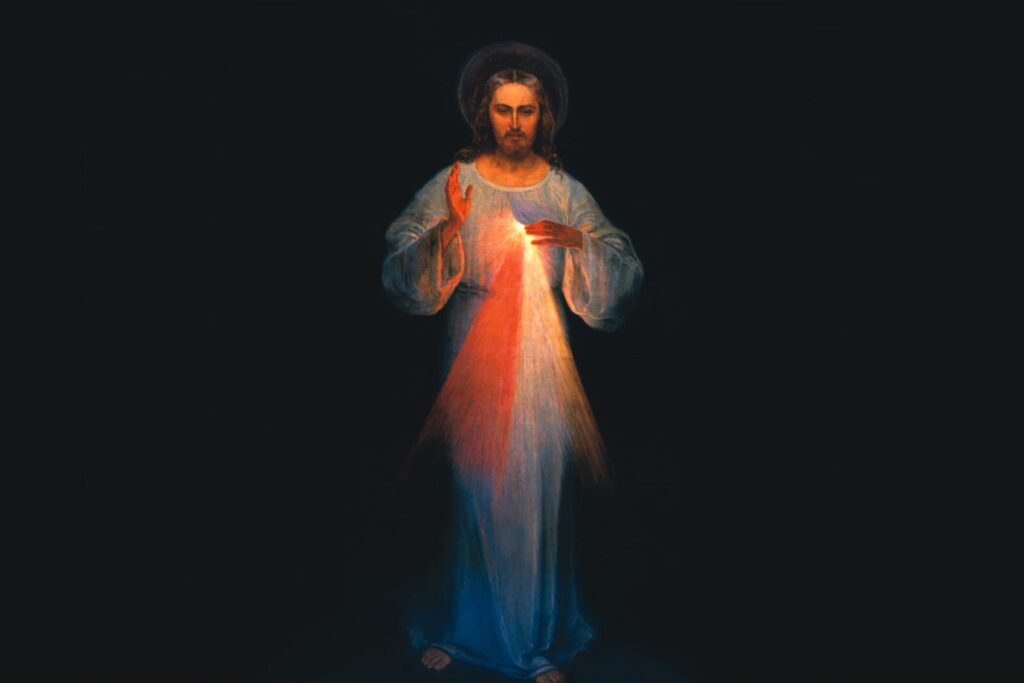
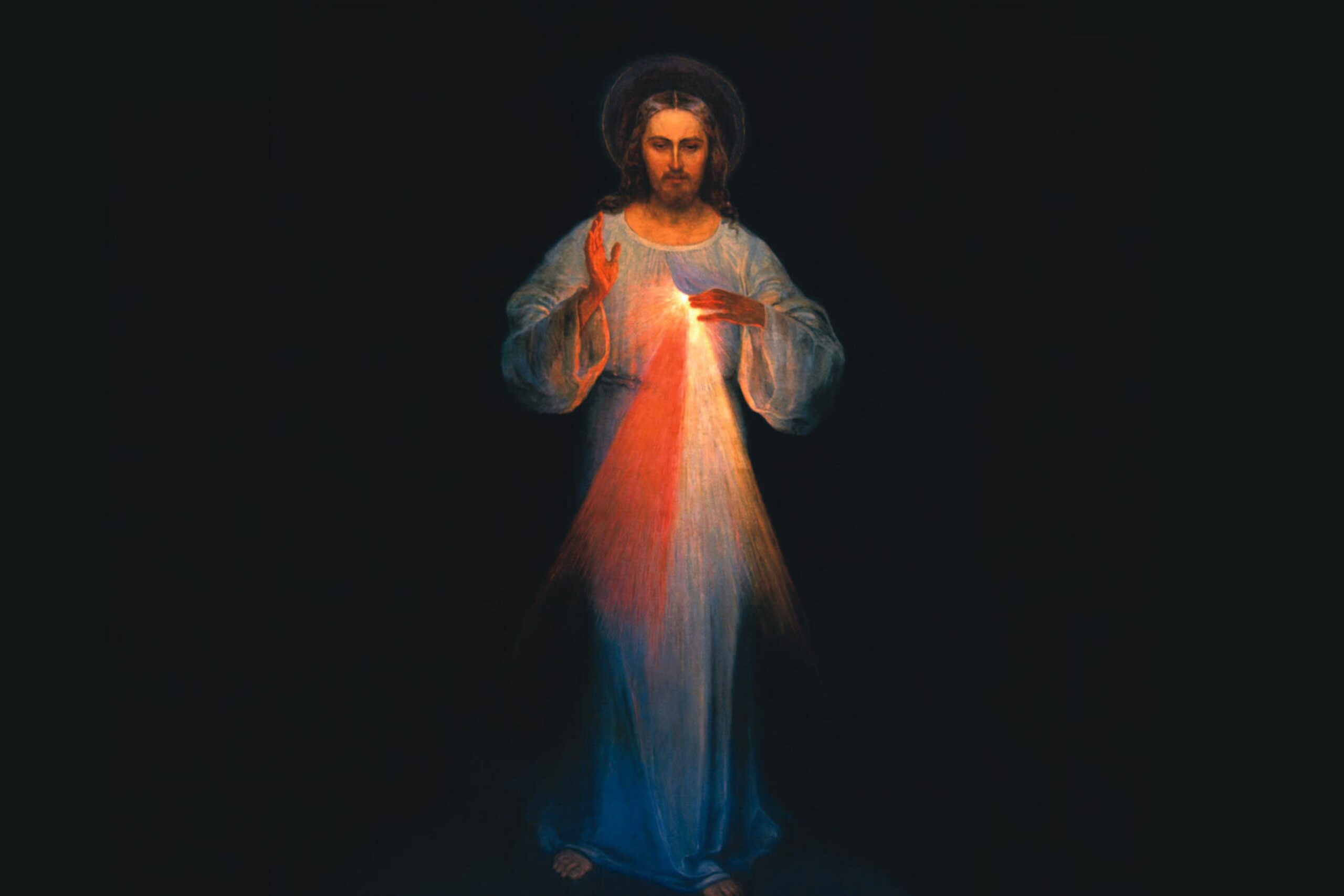
The Image is page 1 of the bulletin and described in detail on page 2.
There is also a Novena for Divine Mercy – nine consecutive days of praying the Divine Mercy Chaplet each day. The Novena is often started on Good Friday but can be started on any day. Pamphlets on the Novena and Chaplet are available after Mass this week and can be found online here:
How to Recite the Chaplet of The Divine Mercy | The Divine Mercy
The Divine Mercy Novena of Chaplets | The Divine Mercy
What is Divine Mercy?
In 1931 the Lord appeared to a Polish nun – Saint Faustina (born Helena Kowalska) and asked her to have his image painted, distributed to all, and venerated:
“Paint an image according to the pattern you see, with the signature: “Jesus, I trust in You.” I promise that the soul that will venerate this image will not perish. I also promise victory over enemies already here on earth, especially at the hour of death. I Myself will defend it as My own glory (Diary, 47, 48). I am offering people a vessel with which they are to keep coming for graces to the fountain of mercy. That vessel is this image with the signature: “Jesus, I trust in You” (327). I desire that this image be venerated, first in your chapel, and [then] throughout the world (47).“
Our Lord Jesus Christ, recorded in the Diary of St. Faustina
St. Faustina took the responsibility to create this image very seriously. She and her confessor, Father Michael Sopocko, hired a professional artist to create the image (Eugene Kazimirowski). It took several months and many different drafts until St. Faustina finally signed off on the final version. In reproductions you might notice some subtle differences between them. Many different versions of this image have been painted, but our Lord made it clear that the painting itself is not what is important. When St. Faustina first saw the original image that was being painted under her direction, she wept in disappointment and complained to Jesus: “Who will paint You as beautiful as You are?” (313). In response, she heard these words: “Not in the beauty of the color, nor of the brush lies the greatness of this image, but in My grace” (313). So, no matter which version of the image we prefer, we can be assured that it is a vehicle of God’s grace if it is revered with trust in His mercy.
Regardless of the Divine Mercy Image they all say “Jesus, I trust in You” as trust in Jesus is one of the main tenants of Divine Mercy. Furthermore, in the image Jesus is stepping forward – approaching us – as he wants to share his Divine Mercy with us. His right hand is blessing us, while His left hand is gesturing towards His Sacred Heart. There are both red and white rays of light emitting from His Sacred Heart. The red ray represents blood and the white ray represents water – just as blood and water came out of his heart when it was pierced by the Roman solider while Jesus was crucified (John 19:34).
“The two rays denote Blood and Water. The pale ray stands for the Water which makes souls righteous. The red ray stands for the Blood which is the life of souls. These two rays issued forth from the depths of My tender mercy when My agonized Heart was opened by a lance on the Cross. Happy is the one who will dwell in their shelter, for the just hand of God shall not lay hold of him (299). By means of this image I shall grant many graces to souls. It is to be a reminder of the demands of My mercy, because even the strongest faith is of no avail without works (742). “
The Diary of St. Faustina
Given the importance of this image, we added a painting of it to both churches – St. John of the Cross and Sacred Heart. Any copy of the image is worthy of veneration and will give lead to graces – as Jesus desired this image to be venerated throughout the world.
That means, replications of the original paintings like the ones in our churches, prayer cards with the image, pictures online, and even the front cover of this bulletin! If you did not have a copy of the Divine Mercy Image but you have a copy of the April 12th Bulletin – now you do!
Diving Deeper
There are five key aspects of Divine Mercy (they make the acronym FINCH)
- Feast (Feast of Mercy): Celebrated on the Sunday after Easter (the Octave of Easter), this day promises the total forgiveness of sins and punishment.
- Image: The image of Jesus with red and pale rays (representing blood and water) signifies His mercy and is meant to be venerated to remind faithful to trust in Him.
- Novena: A nine-day prayer, often starting on Good Friday, in which the Chaplet is said to ask for graces for various groups of souls.
- Chaplet: A prayer for mercy given to St. Faustina, often recited on rosary beads, which promises great graces for those who say it, especially for hardened sinners at the hour of death.
- Hour of Great Mercy: The hour of 3 p.m. (the time of Jesus’ death), designed to focus on His passion and ask for mercy on the whole world